Nvidia pauses AI server shipments to Southeast Asia
TechCrunch reports that Nvidia has asked manufacturing partners to hold back server shipments to Malaysia, Singapore, Thailand and Indonesia as Washington tightens rules meant to keep AI chips out of China. The report gives no timeline, volumes or affected partners.
TechCrunch reported on 26 November 2026 that Nvidia has instructed its manufacturing partners to pause server shipments to Malaysia, Singapore, Thailand and Indonesia. According to the report, the move is tied to a tightening U.S. effort to prevent AI chips from reaching China. The report does not specify which partners were told, how long the pause is meant to last, or how much hardware is affected.
That is the whole of what is public. Everything below is context and interpretation, not new fact.
What the pause actually touches
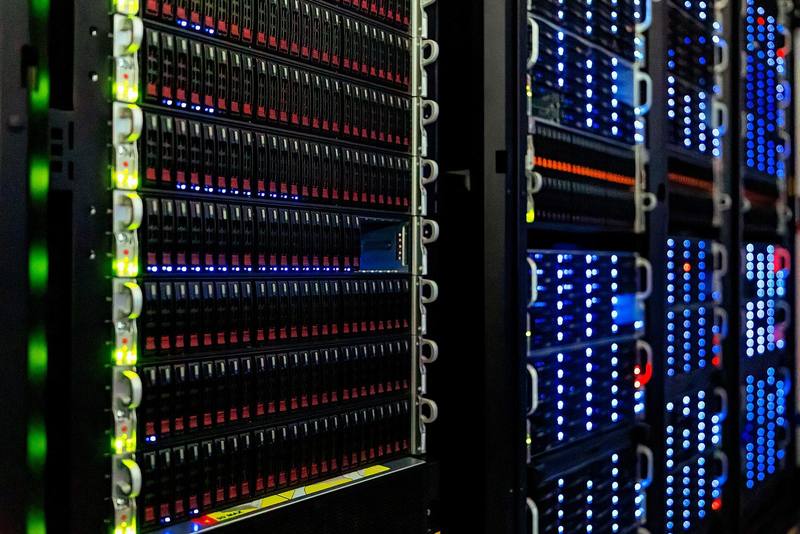
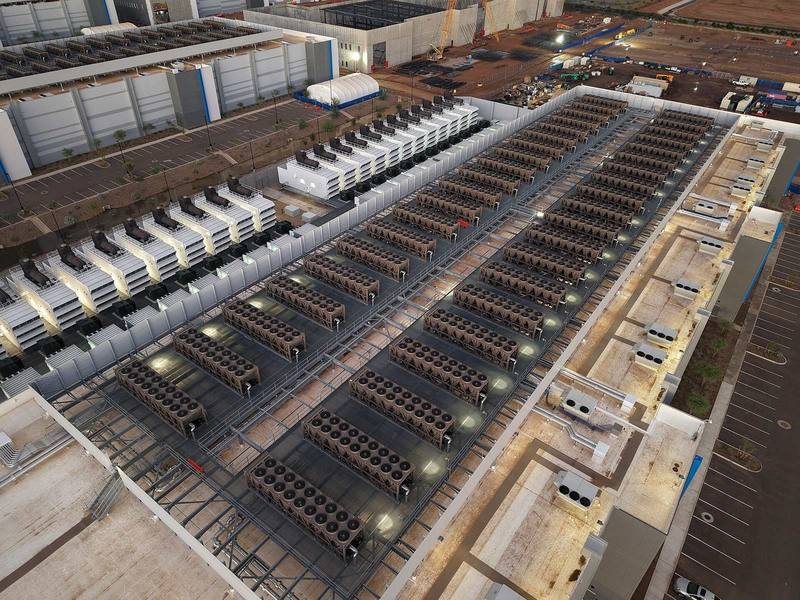
The reported instruction concerns servers, not consumer graphics cards or general-purpose components. In practice, a server shipment pause is a supply-side event: it can delay data-centre buildouts in the named countries and push buyers to renegotiate delivery schedules. For companies whose products run on rented compute, the practical question is whether their provider's capacity plan depends on hardware that is now sitting in a warehouse.
The report also leaves the compliance position of local buyers unclear. A pause can be temporary logistics, a licensing bottleneck, or a broader reclassification of destinations. Those paths have very different consequences, and the announcement does not say which one applies.
Why this matters beyond data centres
Southeast Asia has spent the past few years positioning itself as a neutral layer between U.S. and Chinese technology stacks: hosting, regional cloud capacity, and services for markets that are awkward to serve directly. A shipment pause tests that positioning. If capacity growth slows, the cost of inference and hosting in the region may firm up, and teams that priced products on the assumption of falling compute costs should check that assumption.
For digital businesses, the exposure is indirect but real. AI features embedded in acquisition tools, creative generation, personalisation and support are bought as services whose prices reflect underlying compute. A regional supply constraint rarely shows up as a line item, but it can surface as longer onboarding, quota cuts, or price revisions from vendors.
What a team can check this week
No one outside the negotiating table knows how long this lasts, so the useful work is mapping exposure rather than forecasting.
- List every AI-dependent vendor you pay for and where it says its infrastructure sits; note any that name Singapore or Malaysia.
- Ask vendors for contractual clarity on capacity commitments and on what happens to pricing if supply tightens.
- Check whether your own roadmap assumes cheaper or more available compute over the next two quarters.
- For teams serving the region, review latency and failover plans in case capacity shifts to other geographies.
What the announcement does not give is a date. That absence is itself the operational problem: plans built on a stable supply of AI hardware now carry a variable nobody has quantified. Treat this as a prompt to document assumptions, not as evidence of a specific outcome.
Also worth reading
-
Google and ChatGPT now hand out promo codes, sometimes wrong
Google's AI overviews and ChatGPT now surface promotional codes directly in answers, with ChatGPT offering a copy button. A test by Abondance found that of five codes returned for one query, only two were valid.
-
OpenAI claim sets a 2.25 lower bound on matrix multiplication
OpenAI asserts the matrix multiplication exponent is exactly 9/4, ruling out the long-hoped-for exponent of 2. The new lower bound has no published external review, and its Lean formalisation covers only division-free circuits.
-
Cheaper AI and the Value That Vanishes Before Anyone Sells It
A Stanford estimate puts the annual consumer surplus from generative AI in the US at USD 172.3 billion. Yet some losses, such as the signal carried by a cover letter, never belonged to any seller, which complicates the usual wealth-transfer framing.